
Surfaces Built to Handle Wisconsin Weather
Driveway Sealing & Paving in Lake Geneva for asphalt surfaces exposed to freeze-thaw cycles and seasonal moisture
Asphalt driveways endure repetitive freeze-thaw cycles each winter, where water seeps into small surface cracks, freezes overnight, and expands. Over multiple seasons, this process widens cracks, loosens aggregate, and causes surface deterioration that eventually requires more than sealing. Sontag Home Services Inc. provides driveway sealing and paving services that address both preventive maintenance and replacement needs when Wisconsin's seasonal temperature swings have already caused significant damage.
Sealing applies a protective coating over intact asphalt, filling hairline cracks and blocking moisture penetration. Paving involves removing failed sections or the entire surface and installing new asphalt properly compacted and graded. The decision between sealing and paving depends on the extent of existing cracking, surface integrity, and whether the base remains stable.
Request an on-site evaluation to assess whether sealing extends your driveway's usable life or whether paving is the appropriate repair.
What Proper Sealing and Paving Require
Sealing begins with cleaning the surface—removing dirt, debris, and vegetation from cracks. Small cracks are filled with rubberized crack filler before the sealant is applied in two thin coats. The sealant cures over twenty-four to forty-eight hours, during which vehicles must stay off the surface. Proper sealing does not repair structural damage or deep potholes; it maintains surfaces that remain fundamentally sound.
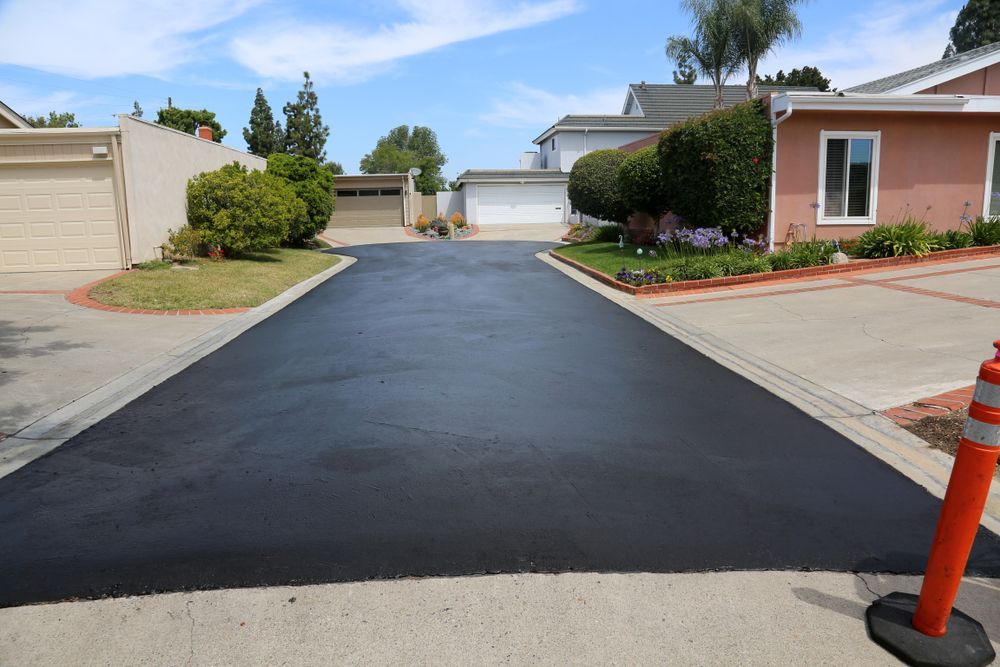
After sealing, the driveway appears uniformly dark, cracks are no longer visible, and water beads on the surface rather than soaking in. You'll notice fewer loose stones and reduced dust during dry weather. Sealing does not eliminate all future cracking, but it slows moisture intrusion that accelerates deterioration during freeze-thaw cycles common in Lake Geneva winters.
Paving requires excavation to a stable base, grading for proper drainage away from structures, and hot-mix asphalt compacted in layers. Thickness depends on expected vehicle loads and soil conditions. New asphalt needs several months to fully cure before sealing is applied. Timing installation in late spring or summer ensures ideal temperature conditions for compaction and curing.
Common Questions About This Service
Property owners considering driveway maintenance or replacement in Lake Geneva typically ask about timing, longevity, and how to determine which service fits their situation.
What condition makes sealing ineffective?
Sealing works when the asphalt surface itself remains intact with only minor cracking. If large sections have crumbled, the base is eroded, or water pools persistently, paving or patching is required first. Sealing cannot restore structural integrity once the asphalt has failed.
How long does sealed asphalt remain protected?
Sealant typically lasts two to three years before reapplication is needed. Exposure to heavy traffic, snow plowing, and chemical deicers shortens the interval. Regular resealing maintains surface protection but does not prevent all age-related wear.
When is the best time to seal or pave a driveway?
Sealing requires temperatures above fifty degrees and no rain for at least twenty-four hours after application. Paving is best scheduled between late spring and early fall when temperatures allow proper asphalt compaction and curing before winter.
What causes driveways to crack in Lake Geneva?
Freeze-thaw cycles drive most cracking. Water enters small surface imperfections, freezes, expands, and widens the crack. Repeated cycles over several winters turn hairline cracks into significant breaks. Poor drainage and thin initial installation accelerate this process.
Does new asphalt need sealing immediately?
New asphalt should cure for six to twelve months before sealing. Sealing too early traps volatiles that need to evaporate, preventing proper curing and potentially softening the surface. The asphalt will appear slightly faded and firm to the touch when ready for sealant.
Sontag Home Services Inc. inspects your driveway's current condition, drainage patterns, and base stability before recommending sealing or paving. Schedule a property assessment to review options and receive a detailed estimate based on observed wear.