
Outdoor Structures That Handle Seasonal Use
Deck Construction & Replacement in Lake Geneva for properties needing new outdoor living space or replacement of aging structures
Decks showing weathering, deterioration, or structural concerns require replacement when continued use presents safety risks or when repeated repairs no longer extend functional lifespan. You notice the need for deck construction or replacement when boards feel soft underfoot, when fasteners pull loose or corrode, when railings flex under pressure, or when new outdoor living space would improve how you use the property during warmer months. Sontag Home Services Inc. builds and replaces decks in Lake Geneva using materials and construction methods suited to moisture exposure, snow loading, sun damage, and freeze-thaw cycling that stress outdoor structures throughout the year.
Deck construction involves site preparation, foundation placement that prevents frost heave, framing that supports anticipated loads, and decking installation with proper spacing to allow drainage and seasonal expansion. Material selection—pressure-treated lumber, composite decking, fastener type—determines how the structure performs under Wisconsin weather rather than how it appears immediately after completion.
Schedule a project-planning consultation to discuss layout options, material choices, and how deck construction integrates with your home's existing exterior configuration.
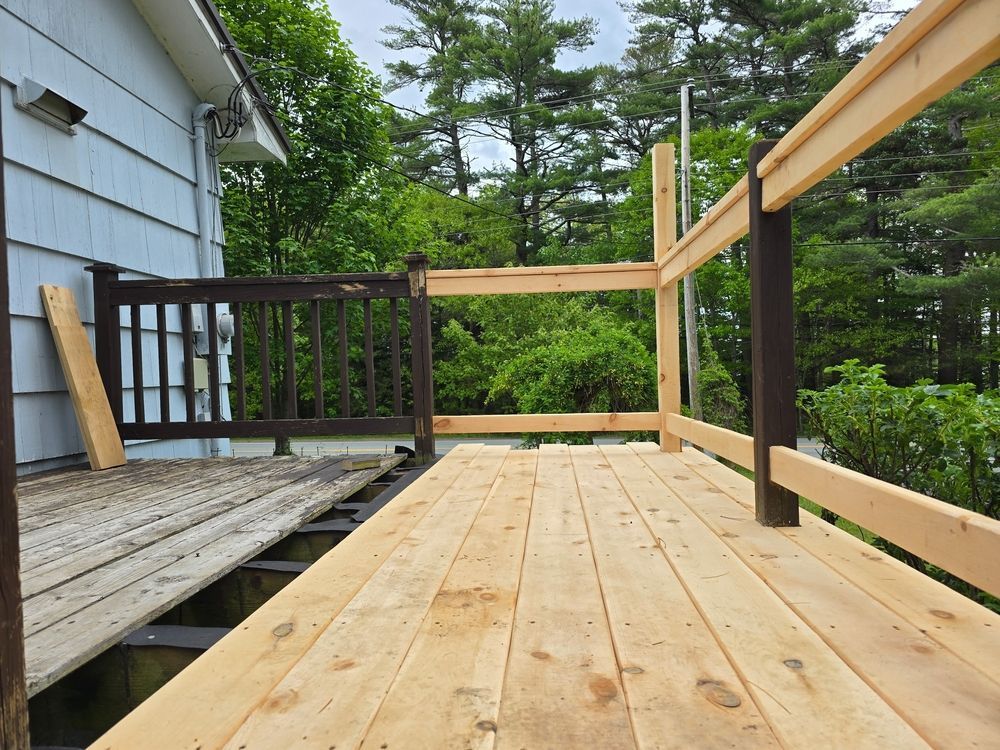
The Difference Between Temporary Fixes and Lasting Construction
Proper deck construction addresses foundation stability, structural loading, and weather exposure from the beginning rather than relying on surface treatments or repairs to compensate for inadequate framing or poorly chosen materials. Ledger board attachment, joist spacing, and post embedment depth all determine whether the deck remains level and secure under snow weight or whether it shifts and separates from the house within a few seasons.
After construction, you notice that the deck surface remains firm and stable underfoot, that railings provide solid support without flexing, and that boards drain quickly after rain rather than holding water that accelerates rot or creates slippery conditions. Fasteners remain secure, joints stay tight, and the structure integrates cleanly with door thresholds and exterior transitions without gaps that allow water or pests to enter the home.
Deck replacement often reveals that original construction lacked proper flashing where the ledger attaches to the house, used inadequate fasteners that corroded under moisture exposure, or employed framing spacing that never met structural requirements. New construction corrects those deficiencies and incorporates current standards for load capacity, railing height, and material durability rather than replicating outdated methods that led to premature failure.
What Property Owners Usually Ask
Before starting deck construction or replacement, homeowners typically have questions about design decisions, material performance, and how the structure will hold up under Lake Geneva's seasonal conditions.
What site preparation is required before deck construction begins?
Site preparation includes removing existing structures or vegetation, establishing level reference points, verifying setback compliance with local requirements, and ensuring that drainage around the foundation will not be obstructed by the new deck footprint.
How does Wisconsin freeze-thaw cycling affect deck foundations?
Freeze-thaw cycling causes soil to expand and contract, which can lift improperly embedded posts or shift footings that were not placed below frost depth, leading to structural movement that separates the deck from the house or creates uneven surfaces.
When should composite decking be chosen over pressure-treated lumber?
Composite decking becomes appropriate when minimizing maintenance, preventing splintering, or achieving consistent color over time outweighs initial cost differences, particularly on high-visibility decks where appearance and low upkeep are priorities.
What causes deck boards to cup or warp after installation?
Cupping and warping typically result from improper moisture content at installation, inadequate fastener spacing that allows boards to shift as they dry, or lack of expansion gaps that prevent seasonal movement, especially when boards are installed too tightly during humid summer conditions.
Why do some deck railings become loose over time?
Railing loosening occurs when post attachments rely on surface fasteners rather than through-bolts, when baluster spacing allows movement under pressure, or when the ledger connection fails and allows the entire structure to shift, stressing all attached components including railings.
Sontag Home Services Inc. provides deck design and construction based on practical outdoor living needs, material durability, and integration with your home's existing exterior. Contact our team to review deck options and develop a construction plan suited to your property and seasonal use expectations.